
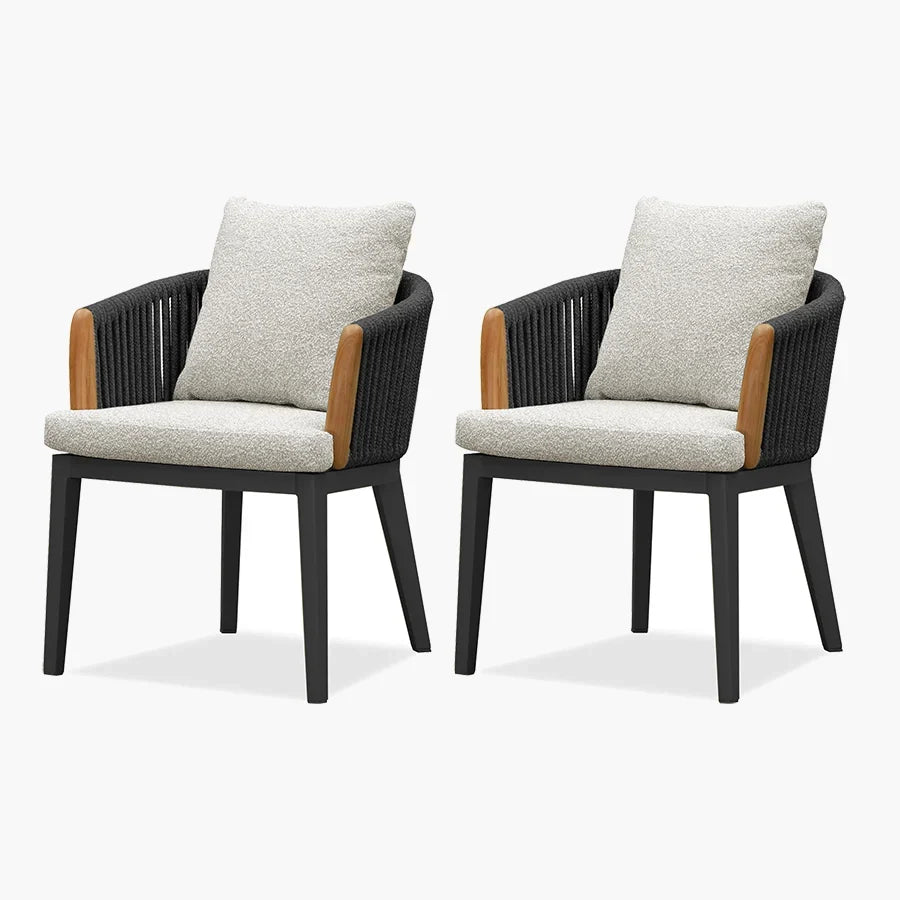
Put your aluminum outdoor dining set somewhere de-icer won't reach it directly. That means away from where it's spread, where treated snow gets piled, where meltwater runs, and where people walk in from salted pavement. No single distance is safe for every yard, so plan around the paths you can actually see on your patio.
After that, clean the frame the way its own finish requires. Plain aluminum, wood-grain aluminum, and powder-coated aluminum each come with different instructions. Don't use one finish's cleaning steps as a rule for every set.
Place the Set Outside Winter Treatment and Traffic Paths
Pick your furniture spot outside visible salt, snow-pile, and foot-traffic routes after observing one or two winter cleanups. Then adjust the zone if moving the table is not possible.
Keep Furniture Out of Application and Snow-Storage Zones
Start with the places where de-icer is spread on purpose and where treated snow ends up.
- Treated walkways and driveways: Notice where de-icer gets spread next to the patio. Keep the table and chairs off that edge if you can, so spreading and shoveling don't reach the frame.
- Snow piles: Notice where shoveled or plowed snow from treated areas gets stacked. If the pile sits against the dining area, pick a new pile spot away from the furniture.
- Fixed piles: If the pile has to stay where it is (because of a fence or narrow side yard, for example), move the furniture away from it for the season when you can.
Trace Foot Traffic, Drainage, and the Louvered Pergola Layout
Salt can also reach the set through shoes, shovels, and runoff, even if no one spreads it nearby.
- Walking route: Follow the usual path from salted pavement onto the patio. Keep that main lane clear of the dining area, so boots and shovels don't go between chairs.
- Meltwater: Watch where melting snow drains during a thaw. Don't set table legs in that channel or low spot.
- Louvered pergola: A dining area under a louvered pergola still needs the same check. The roof doesn't keep treated snow, runoff, or tracked-in salt from reaching the patio floor. Plan around the paths underneath it.
If you're rearranging the space anyway, these outdoor dining layouts can help you move the table and keep a clear walkway.
Match Care to the Documented Frame Finish
Follow the specific care instructions for your set's finish without mixing steps across different finishes. The examples below reflect specific categories and manufacturers, so consult your product manual as the final authority.

Aluminum and Wood-Grain Aluminum Care Directions
Our patio conversation set care guide gives separate steps for two frame types:
- Aluminum frames: Dust with a soft duster. When needed, wipe with a soft cloth dampened with clean water. For stubborn dirt, use a mild, non-abrasive detergent.
- Wood-grain aluminum frames: Clean with a soft cloth or sponge and mild soapy water. Rinse with clean water and dry well. Avoid harsh chemicals, abrasive cleaners, steel wool, rough brushes, and sharp objects. Wipe off extra moisture after cleaning or heavy rain, and don't let water sit on the frame.
For winter months and extreme weather, the same guide says to store our conversation sets indoors or use a cover. If you go with a cover, match an outdoor furniture cover to your set's shape and size. For wood-grain frames that also see summer pool use, we have more on wood-grain aluminum frame cleaning.
Keep Salt-Specific Powder-Coat Guidance in Scope
Feeney is a manufacturer whose care sheet names de-icing salt directly. Feeney's salt-exposure maintenance guidance lists de-icing salts as a harsh-environment exposure. For its powder-coated aluminum products, that exposure means cleaning more often than the usual once or twice a year.
The same sheet covers how to clean. Feeney's powder-coat cleaning directions say to:
- Use warm water and mild soap.
- Wipe with a soft cloth or sponge.
- Finish with a fresh-water rinse.
- Avoid power-cleaning tools and abrasives.
- Clean when the metal is shaded.
- Don't clean in freezing temperatures or in conditions that cause condensation. The sheet warns this can leave lasting streaks.
These steps are written for Feeney's own products, not tested on patio furniture. If your set is powder-coated, check its manual before you change how often you clean it or try a different cleaner.
FAQs
Should I clean the frame right after a winter storm?
Not if it's below freezing. Feeney's powder-coat sheet says not to clean in freezing temperatures or in conditions that cause condensation. Wait for a milder day when the metal is shaded, and check your own set's manual for its temperature limits.
How do I find out what finish my set has?
Check the product listing, manual, or order paperwork for the frame description, such as aluminum, wood-grain aluminum, or powder-coated aluminum. If you can't tell, stick to gentle, non-abrasive cleaning until you can confirm it. Different finishes have different cautions.
Is a cover enough if the set stays near a salted walkway?
A cover helps, but it doesn't fix where the set sits. Our conversation set guide recommends indoor storage or a cover for winter. Still keep the set away from snow piles and meltwater, because a covered set can sit in runoff just like an uncovered one.
Can I use a pressure washer to remove salt residue?
The Feeney sheet says to avoid power-cleaning tools on its powder-coated products. Our guide for wood-grain aluminum also says to skip rough cleaning tools. A soft cloth or sponge and a rinse is the safer choice unless your manual says otherwise.


