Measure the furniture in the exact spot and arrangement where it will sit under the cover, then match the cover's shape, finished dimensions, vents, tie-downs, and water-shedding design to that arrangement. A cover sized for a nominal furniture category, like "dining set" or "sectional," often misses chair backs, inside corners, or umbrella poles that stick out past the main frame. Getting the outside footprint right the first time saves you from a cover that sags, drags, or leaves gaps for rain to get in.

How to Measure Outdoor Furniture for a Cover
If you are wondering how to measure for patio furniture covers, start with the furniture set up exactly as it will stay while covered, not as it looks when you are using it every day.
Set the Furniture in the Covered Arrangement
- Push dining chairs under the table if that is how they will stay under the cover.
- Place cushions, back cushions, ottomans, recliners, or accessories in the position they will hold while covered.
- Decide now whether cushions stay on the furniture or get stored separately, since that changes the height and width you measure.
Measure the Outside Dimensions
- Measure the widest left-to-right span, the deepest front-to-back span, and the height from the floor to the highest point.
- Use the outermost edge of furniture, cushions, arms, feet, or backrests, whichever sticks out the farthest and will stay under the cover.
- For round pieces, record the full diameter. For irregular shapes, measure each leg or side separately.
Write these down as a simple line: width x depth x height, labeled with the arrangement you measured (for example, "6-chair rectangular set, chairs pushed in").
Record Fit-Changing Details
- Sketch inside corners and open gaps instead of treating an L-shaped piece as one flat rectangle.
- Note protrusions such as umbrella poles, holes, raised arms, handles, or headrests.
- Compare your worksheet against the cover's finished dimensions and shape chart, not just the furniture category listed on the product page.
How to Choose the Right Cover for an Outdoor Dining Set
If you are searching for “best cover for outdoor dining set,” start with the full pushed-in chair footprint and the tallest point, not just the tabletop size.
Rectangular or Square Dining Sets
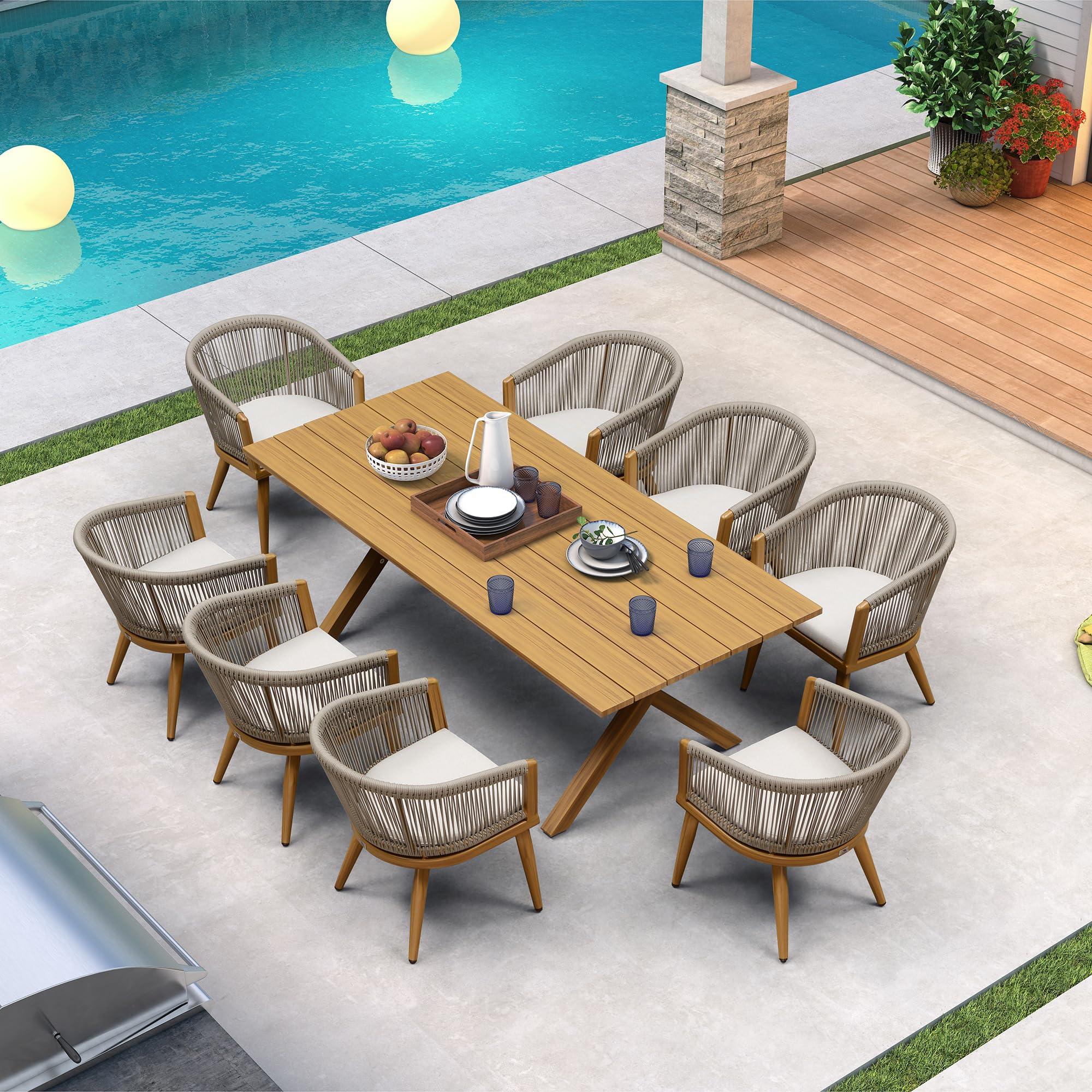
Measure the outside edges of the chairs once they are pushed in, not the table alone. Use the tallest chair back or table feature as your height figure. Compare that length, width, and height against the cover's finished dimensions before you buy. Our aluminum dining sets, for example, come in a few different table lengths, which is exactly why measuring the assembled set matters more than the model name.
Round Dining Sets
Record the diameter across the entire covered arrangement, including chairs, not just the tabletop. Chair backs often push that circle wider than the table itself. Look for a cover built for a round footprint rather than stretching a rectangular one over a circular set, since a mismatched shape tends to bunch at the edges.
When Separate Covers Make More Sense
Separate covers for the table and each chair work better when spacing, an odd table shape, or protrusions keep one large cover from sitting evenly. Base the decision on how the furniture will actually sit outside and how often you are willing to pull covers on and off. Once you have your measurements, compare them against our patio dining sets' size charts to see which arrangement your cover choice needs to match.
How to Cover an L-Shaped Outdoor Sectional
An L-shaped sectional is defined by its two legs and the inside corner, so a single average-size rectangle is rarely the right approach.
Capture Both Legs and the Inside Corner
Record the length and depth of each leg, then note the total outside width and depth of the whole piece. Measure the highest point, whether that is a back cushion, an arm, or an ottoman. Sketch the inside corner and any open gap that a flat rectangle would try to bridge instead of follow.
Choose One Sectional Cover or Multiple Covers
Favor a single sectional-specific cover when its shape chart follows the corner and the installed cover sits reasonably even across both legs. Consider coordinated component covers instead when the two legs have different heights, the corner creates extra loose fabric, or you rearrange the pieces often.
Our Breck L-shaped modular sectional comes in several size configurations. That means the corner and leg dimensions matter more than the words “L-shaped” when you choose a cover. Do not substitute a generic oversized rectangle for a documented sectional shape. If the rectangle leaves the inside corner exposed, switch to a sectional-specific or coordinated component-cover approach. Use the same change if it bunches into large folds or creates low pockets.

Recheck Modular Changes
Measure again whenever ottomans, coffee tables, or other modular pieces move to a new position. Keep cushions in the same spot you used when you measured. Treat a flexible modular layout as a signal to double-check the cover's size chart before every order, not just the first time.
Choose Covers for Chaise Lounges and Umbrellas
Chaise lounges need a long, narrow cover shape, while umbrellas usually need a completely separate solution.
Chaise Lounges
Compare the chaise's longest, widest, and highest dimensions with the cover's chart. Measure it in the position it will hold while covered, especially if the back reclines or cushions shift when not in use. Check raised arms and headrests, since these are often the true high points, not the seat itself. Our chaise lounge chair measures 67.5 inches long, 25.6 inches wide, and 30.7 inches high; figures like these are useful as a reference point for what to record on your own chaise, not proof that any particular cover will fit it.
Umbrellas and Irregular Pieces
Treat an umbrella as its own cover problem unless a product specifically states it covers umbrellas. Record whether it will be open, closed, or stored, along with the pole position, ribs, base, and any protrusions. Use a separate cover when the item cannot be enclosed without stretching fabric over unsupported gaps or blocking the attachment points you need to secure it.
Using Covers Under Patio Gazebos or Pergola Kits
Furniture under patio gazebos or pergola kits can still need its own fitted cover, because overhead shelter is not the same as full protection.
Treat Overhead Shelter as Exposure Context
Patio gazebos or pergola kits can cut down direct overhead sun and rain while leaving the sides open to wind. Wind-driven rain, roof runoff, humidity, dust, and long stretches without use can still reach the furniture underneath. Base the cover decision on the actual location, not just the presence of a roof overhead.
Keep the Cover Matched to the Furniture
Measure and fit the dining set, sectional, chaise, or other pieces separately from the gazebo or pergola structure itself. A furniture cover is not a structural enclosure, and it should never be stretched over the gazebo or pergola frame. Confirm that straps, vents, and clearance stay reachable once the furniture sits under the structure, so you can still open vents or adjust tie-downs without removing the cover completely.
Match Vents, Tie-Downs, Clearance, and Water Shedding
Once you know the shape and size you need, the remaining choice comes down to four features: how well the cover vents, how it attaches, how much it clears the ground, and how it sheds water.
Use the Feature Comparison
| Feature | What to Inspect | Consumer Result |
|---|---|---|
| Geometry | Does the shape chart follow the set's outline and corners? | A matched shape avoids folds and exposed edges |
| Ventilation | Are the vents open and unobstructed once installed? | Unblocked airflow supports drying damp surfaces |
| Tie-downs | Do the straps, buckles, or drawcords reach a real anchor point on the frame? | Secure attachment reduces shifting in wind |
| Clearance | Does the finished cover touch the ground evenly without dragging? | Even clearance limits dirt pickup and low spots |
| Water shedding | Does the shape or an approved support method direct water off the top? | Less standing water sitting on the fabric |
General air exchange supports drying damp surfaces. Cross-ventilation with an entry and exit opening is a recognized part of that process, according to NDSU Extension guidance on drying out after moisture exposure. This is a general airflow principle, not a guarantee about any single cover's performance. Keep vents open and clear of furniture or cushions. If you are shopping for a cover for waterproof outdoor furniture, treat any waterproof wording as a starting point, not a performance guarantee. If you are deciding whether covering aluminum furniture in wet weather is worth the extra step, unblocked vents and a shape that sheds water both matter more than the frame material alone. Before you cover anything, follow a dry cushion storage routine so you are not sealing moisture in with the furniture.
Check the Installed Cover for Low Pockets
Look across the top and around the corners once the cover is on. Vents and attachment points should stay reachable, not buried under folds. If water or debris settles into a low spot, revisit the shape, the clearance, or the product's fit instructions instead of assuming the cover is simply the wrong size.
Final Fit and Care Check Before You Buy or Cover
The final go/no-go check is to compare the measured arrangement with the cover's documented dimensions and geometry, confirm its features and care details, and inspect the installed fit before regular use.
- Compare your worksheet measurements against the selected cover's finished dimensions and shape chart before adding it to your cart.
- Confirm the product listing shows vents, tie-downs, and care instructions, and check that their locations make sense for your furniture.
- After installation, check for exposed edges, dragging fabric, blocked vents, or low pockets where water could collect.
- Remove debris and let the furniture, cushions, and cover dry as the instructions describe before you cover or store anything.
Pause before you buy if the finished cover dimensions, shape, or care details are not documented well enough to compare with what you measured. A quick message to customer support or a careful read of the size chart beats guessing.
FAQ
How Do I Measure for an Outdoor Furniture Cover?
Measure the widest and deepest points of the assembled arrangement, plus its highest point. Include cushions, chair backs, arms, headrests, umbrella poles, and other protrusions that will stay under the cover. Then compare the arrangement's shape and finished dimensions with the selected cover before buying.
Should Patio Furniture Covers Touch the Ground?
There is no single rule for every cover; follow the specific product's fit instructions. In general, a properly fitted cover should reach evenly around the base without dragging on the ground or leaving avoidable low pockets where water or debris can collect.
How Do I Keep a Patio Furniture Cover from Blowing Away?
Wind management depends on the straps, buckles, or drawcords built into that specific cover and how to attach them to a solid anchor point on the furniture frame. Exposed locations need more attention to those attachment points, but no cover should be treated as storm-proof.
How Do I Clean an Outdoor Furniture Cover?
Remove debris first, then use only the cleaning method listed in the product's own care instructions, since fabrics and coatings vary. Let the cover air-dry completely before you put it back on the furniture or fold it away for storage.