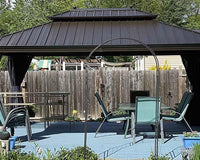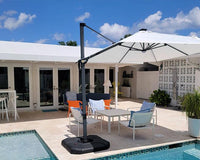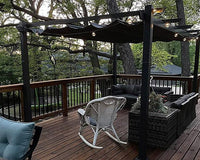
A wooden gazebo winter inspection is a look-and-record job. Walk the structure, check the wood and finish, the joints and connections, and the roof and water-shedding details, then log each spot with a photo or note. That record tells you what you saw, not what caused it, so it can't tell you whether the gazebo is safe or ready for winter.
The second half of the job is finding the care and weather-use instructions for your exact model. Once you have both pieces, you can bring specific questions to the manufacturer or a qualified professional instead of guessing.
What to inspect on a wooden gazebo before winter
Check three areas in order and give every observation its own entry: where it is, what you see, and a photo or note. Describe only what you can see, and log spots that look unchanged too, so you have something to compare against next season.
Here are three illustrative entries that show the format. They are examples, not real findings.
| Location | Visible observation | Photo or note |
|---|---|---|
| North post, 6 in. above base | Dark staining, finish flaking | Photo 01 |
| Southeast rafter-to-beam joint | Gap between members | Photo 02 |
| Roof edge over entry | No visible change | Note: baseline |
Wood surfaces and finish
Start with the surfaces you can see and touch, and name the exact board or member for each entry.
- Posts, rails, benches, floorboards, and trim: note discoloration, staining, or finish that looks worn, peeling, or flaking.
- Cracks and splits: record which member, the rough length in inches, and whether the crack runs along the grain or across it.
- Soft- or crumbly-looking areas: record the location and take a close photo.
InterNACHI's guide to wood decay describes advanced decay as soft and advanced brown decay as crumbling easily. Just seeing that look on your gazebo doesn't confirm decay or tell you how serious it is. Log it for follow-up rather than probing or digging into the wood yourself.

Joints and connections
Next, look at every place where two parts meet. Don't test, tighten, or repair anything during this pass.
- Post bases: note where posts meet the floor, footing, or base, and anything that looks shifted or separated.
- Beams, rafters, and braces: record gaps that look new or wider than at matching joints elsewhere.
- Visible hardware: note brackets, bolts, or screws that look rusted, missing, or pulled away from the wood.
Shoot each joint from an angle you can repeat next season, and put the photo number in your record. If any component looks detached or at risk of falling, keep people away from that area and get a qualified assessment promptly. A visual checklist doesn't clear the structure for use.
Roof and water-shedding details
Finish overhead. Describe stains and changes as you see them, and don't label them as leaks or failures.
- Roof surface: note shingles, panels, or boards that look lifted, missing, cracked, or out of line.
- Edges and overhangs: record visible gaps, sagging lines, or debris buildup.
- Gutters or downspouts, if present: note how they're attached. HUD's residential inspection guide, which is written for houses, also points to downspout straps and fasteners as things to check.
- Underside of the roof: record any stains or marks on the ceiling boards.
Save questions about snow, drainage, or how the roof handles weather for your model's instructions. Once your findings are written down, our annual gazebo care checklist covers routine seasonal upkeep.
How to identify your gazebo and find its instructions
Only follow care and winter weather-use instructions once you've confirmed they belong to your actual gazebo. A model that looks similar can come with different directions, so you need either the matching manual or a direct answer from the manufacturer.
Assemble the identifying information
Collect what you already have before you contact anyone:
- Purchase records, such as an order confirmation, receipt, or invoice
- Any assembly manual, packaging, or paperwork you kept
- Any model name, number, or size printed on the structure or its paperwork, written exactly as shown, including variant details
- Clear photos of the whole structure from two sides, plus the roof, a typical joint, and any markings
- The footprint in feet, measured post to post
Our guide to identifying your gazebo by model shows how model, size, measurements, and photos work together to pin down an exact match. Check the material as well. A wood-grain aluminum louvered pergola can look like wood, and wood care guidance doesn't apply to a metal frame.
Confirm the matching care and weather-use guidance
With your details in hand, work through this sequence:
- Match the product. Send your records and photos to the manufacturer or seller and ask them to confirm the exact model.
- Get the current instructions. Ask for the current manual or care guidance for that confirmed model, and where to find it if your records don't say.
- Log the answers. For wood and finish care, roof and water-shedding details, and winter weather use, mark each one as answered (with the document or reply it came from) or unresolved.
If the model is confirmed and the instructions match, follow those directions. If you can't confirm the model, or the manual doesn't cover winter use, treat that question as unresolved. Ask the manufacturer to identify the model and send the instructions that apply, and don't fill the gap with another model's manual. If you bought your structure from us, contact our support team with your order details and photos.
What to ask about concerning or uncertain observations
Take any entry that worries you or that you can't explain to the manufacturer or a qualified professional as a question, not a conclusion. Put the most urgent or least certain entries first.
Prioritize the question by what remains uncertain
- Anything that looks detached or at risk of falling. Ask for a prompt on-site assessment from a qualified professional.
- Visible conditions that are unclear or changing. Ask, "What does this observation mean for this model?" and "Do you recommend a qualified on-site assessment?"
- Unresolved care or use instructions. Ask, "Which current care or weather-use instruction covers this part and this condition?" and "What should I do about winter use while this concern is unresolved?"
Prepare a concise question record
Keep each handoff short enough to read in one pass:
- Model details exactly as shown, or "model unknown"
- The location and neutral description from your record
- The matching photo or note reference
- The one instruction or weather-use question still unanswered
- A request for the assessment or next step they recommend
Until the manufacturer answers a product-specific weather-use question, leave it open in your record.
FAQs
Should I press or poke wood that looks soft?
Not as part of this review. Note the location, take a close photo, and pass it to a qualified professional. Technical assessment of wood deterioration uses specialized methods. A USDA Forest Service report covers non-destructive evaluation techniques for locating deterioration in timber bridge components and other structures.
Is it worth recording spots that look fine?
Yes. A "no visible change" entry with a photo gives you a baseline for your next wooden gazebo winter inspection. If that spot looks different next season, you'll have a before-and-after pair to show the manufacturer or a professional.
What if my structure turns out to be a louvered pergola, not a wooden gazebo?
Then the wood-focused parts of this record may not fit your structure, and you'll need the care instructions for that pergola model. Our louvered pergola season-proofing guide is a better place to start. Your confirmed model's manual still takes priority.