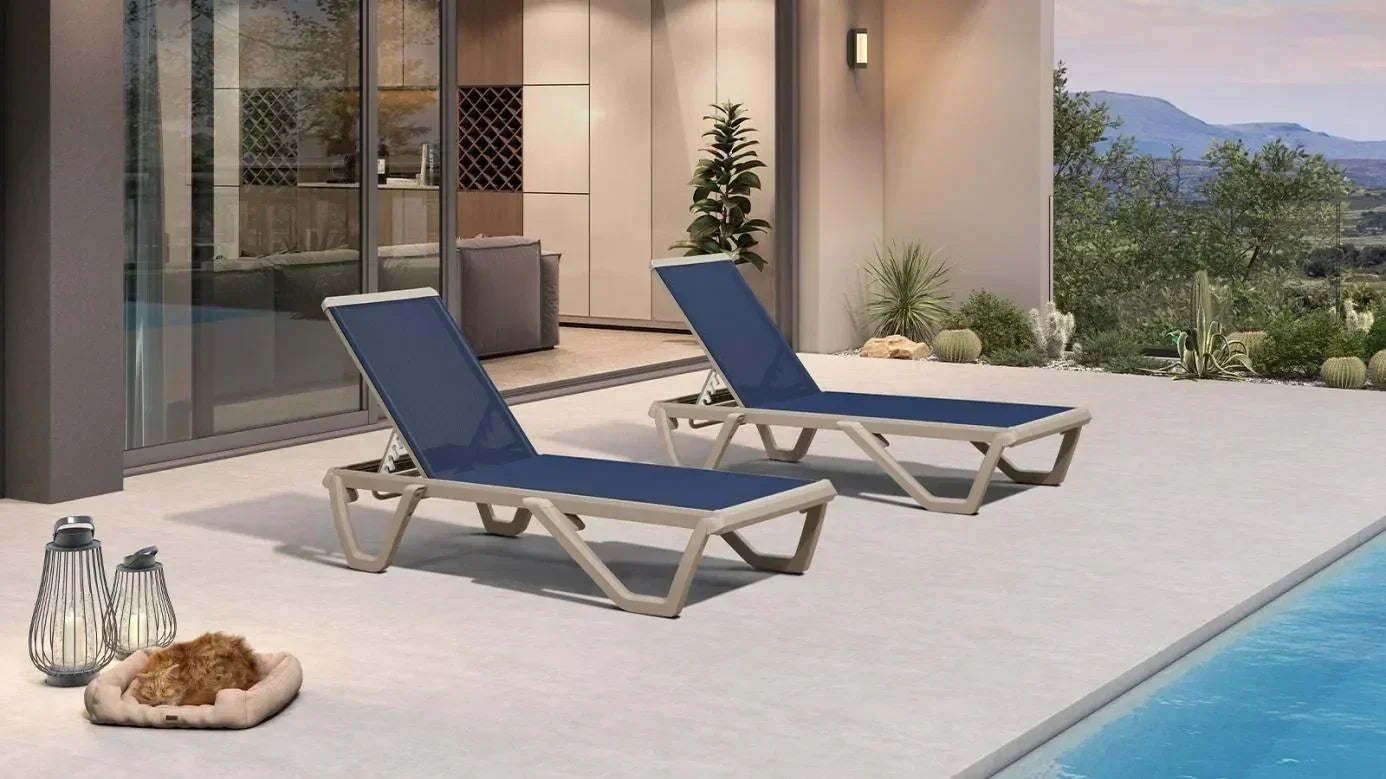
High-quality mesh lounge chairs provide exceptional comfort and breathability, making them a staple for poolside relaxation. However, after several seasons of exposure to sunlight and weight, the fabric can lose its elasticity, leading to an uncomfortable "hammock" effect. This guide introduces the "Sling Tension" test to help you diagnose the severity of the problem and provides actionable steps for saggy mesh chair repair. By following these professional maintenance and repair techniques, you can restore your seating to its original firm and supportive state.
Identify the Cause of Sagging in Armchair Outdoor Furniture
Before attempting a repair, it is necessary to understand why the mesh fabric on your armchair outdoor furniture has begun to lose its shape. Most outdoor slings are made from PVC-coated polyester yarns, which are designed to be weather-resistant but are not entirely immune to the laws of physics and environmental degradation.
Constant exposure to ultraviolet (UV) rays is the primary cause of fabric fatigue. Over time, UV radiation breaks down the chemical bonds in the PVC coating, causing the polyester core to stretch and eventually become brittle. In regions with high temperatures, the heat can soften the yarns, allowing them to elongate further under the weight of the user. This is a common issue even with premium armchair outdoor furniture, as the tension required to provide support is constant.
The way a chair is used also impacts the longevity of the mesh. Frequent "plopping" into the chair or using it to support weight beyond its rated capacity puts sudden, intense tension on the side rails and the fabric. This repeated mechanical stress causes the yarns to "creep," a technical term for the slow, permanent deformation of materials under constant load. Once the fabric has reached its elastic limit, it will no longer return to its original flat profile.
Performing the "Sling Tension" Test
The "Sling Tension" test is a simple diagnostic tool used to determine if your chair requires a simple adjustment or a complete fabric replacement. This test measures the amount of deflection in the mesh compared to the frame's horizontal plane.
To perform the test, place a long, straight edge (like a yardstick or a level) across the two side rails of the chair at the widest part of the seat. Measure the vertical distance from the straight edge down to the lowest point of the mesh while the chair is empty.
- 0 to 1 inch: The tension is excellent. No repair is needed.
- 1 to 2 inches: The fabric is beginning to sag. This is the ideal stage for proactive saggy mesh chair repair.
- More than 2 inches: The fabric has likely lost its structural integrity. At this point, the user may feel the crossbars of the frame, indicating that a adjustment may no longer be sufficient.

Step-by-Step Guide to Saggy Mesh Chair Repair
If your chair has failed the tension test but the fabric is still in good physical condition (no rips or visible fraying), you can attempt to restore the tension. This section outlines the most effective methods for tightening the mesh on aluminum outdoor furniture and steel frames.
Tightening the Frame Hardware
In many cases, the sagging isn't caused by the fabric stretching, but by the frame rails moving closer together. Most mesh chairs use "spreader bars" or "stretcher bars" located behind the backrest and under the seat.
1. Check all bolts and screws connecting the side rails to the main frame.
2. If the bolts have loosened, the side rails may have bowed inward under the tension of the fabric.
3. Use a socket wrench or Allen key to tighten these components. This simple step can often pull the rails back into their original position, instantly increasing the tension on the mesh.
The "Sun and Water" Shrinkage Technique
For minor sagging in PVC-coated polyester mesh, you can utilize the material’s thermal properties to achieve a slight "shrink."
1. On a very hot, sunny day, thoroughly soak the mesh with cold water from a garden hose.
2. Leave the chair in direct sunlight to dry completely.
3. The combination of rapid evaporation and high heat can cause the plastic fibers to tighten slightly as they dry.
Note: This method provides only a temporary fix and is most effective on newer chairs that have just begun to show signs of slack.
Adjusting the Side Rail Spreader Bars
Professional-grade aluminum outdoor furniture often features adjustable or replaceable spreader bars. If your chair feels loose, you can use a "sling spreader tool" to physically push the side rails further apart.
1. Loosen the bolts connecting the side rails to the frame.
2. Insert the spreader tool between the rails and expand it until the fabric is taut.
3. While the tool holds the tension, retighten the bolts.
4. Remove the tool. The frame will now hold the fabric at a higher tension than before.
Re-seating the Plastic Splines
The mesh is held in the side rails by a plastic cord called a "spline" that slides into a C-shaped channel. If the fabric has slipped or bunched at one end, it will create an uneven sag.
1. Remove the end caps from the side rails.
2. Use a pair of pliers to gently pull the fabric and the spline together toward the top or bottom of the rail to redistribute the tension evenly.
3. Ensure the fabric is perfectly centered in the channel. Often, realigning the fabric can eliminate localized sagging and improve the overall feel of the chair.
Installing Support Straps
If you want to extend the life of the fabric without a full replacement, you can install "helper straps" under the seat.
1. Purchase vinyl outdoor furniture strapping that matches the color of your frame.
2. Attach 2-3 straps across the underside of the seat frame, running perpendicular to the side rails.
3. These straps act as a secondary support system, preventing the mesh from dipping too low when someone sits down. This is a common practice for older luxury patio furniture where the frame is still perfect but the fabric is aging.
When to Replace vs. Repair Your Luxury Patio Furniture
Deciding whether to perform a saggy mesh chair repair or invest in new fabric is a matter of cost-benefit analysis. Luxury patio furniture is designed to last decades, but the slings are considered "consumable" parts that should be replaced every 5 to 10 years.
Look closely at the weave of the mesh. If you see "windows" (gaps in the weave) or if the PVC coating is flaking off like dandruff, the fabric is structurally compromised. No amount of tightening will fix a brittle sling; in fact, increasing the tension on old fabric often causes it to tear suddenly. If the fabric feels stiff and "crunchy" rather than flexible, it is time to order a replacement sling.
If the frame is made of high-quality aluminum outdoor furniture with a powder-coated finish, it is almost always worth replacing the sling rather than the whole chair. Replacement slings are typically a fraction of the cost of a new luxury chair. However, if the frame is showing significant rust (in the case of steel) or if the joints are cracked, a repair is not a safe or viable long-term option.

Proactive Sling Patio Furniture Maintenance Tips
Prevention is the most effective way to avoid sagging. Consistent sling patio furniture maintenance can double the lifespan of your mesh and keep the tension within the "passing" range of the tension test.
Regular Cleaning to Prevent Chemical Breakdown
Body oils, suntan lotions, and chlorine from the pool can chemically weaken the PVC coating on the mesh. To prevent this, wash your slings at least once a month with a solution of mild dish soap and warm water. Use a soft-bristled brush to reach into the weave of the mesh, then rinse thoroughly. Removing these contaminants prevents the fibers from becoming slick and prone to stretching.
Using Protective Covers
The sun is the greatest enemy of mesh tension. When the chairs are not in use, especially during the off-season, use high-quality furniture covers. Covers block UV rays and prevent the cycle of heating and cooling that causes the fibers to expand and contract. This simple habit is the cornerstone of effective sling patio furniture maintenance for any high-end outdoor set.
Avoiding Constant High Loads
While it is tempting to use a lounge chair as a step ladder or a place to stack heavy pool equipment, this should be avoided. Constant, localized pressure on a small area of the mesh will cause a permanent "pocket" to form. Distribute weight evenly and ensure the chairs are used only for their intended purpose to maintain the factory-set tension.
The Role of Materials in Aluminum Outdoor Furniture Longevity
The combination of a mesh sling and a metal frame is popular because aluminum outdoor furniture is lightweight and rust-proof. However, the quality of the aluminum impacts how well the chair handles fabric tension over the years.
Most sling chairs use extruded aluminum tubing. High-quality frames use thicker "wall" dimensions in the tubing to ensure the side rails do not bow inward under the 40-100 pounds of tension required to keep the mesh tight. If you have budget-friendly chairs, the metal itself may be bending, which causes the sag. In contrast, luxury patio furniture uses heavy-duty extrusions that stay perfectly parallel for years, ensuring the fabric remains the only variable in the tension equation.
In premium aluminum outdoor furniture, the C-channel that holds the fabric is integrated into the extrusion. Over time, salt and grit can enter this channel, acting like sandpaper against the fabric. Part of your long-term maintenance should include checking these channels for debris. Keeping the interface between the metal and the fabric clean reduces friction and prevents the tiny tears that eventually lead to sagging and failure.

Conclusion
Maintaining the tension in your mesh lounge chairs is essential for both comfort and the longevity of your outdoor set. By regularly performing the "Sling Tension" test and utilizing techniques like hardware tightening and proper cleaning, you can effectively manage saggy mesh chair repair at home. Whether you are maintaining a single armchair outdoor furniture piece or an entire suite of luxury patio furniture, proactive care ensures your investment remains a supportive and beautiful part of your outdoor living space for years to come.
FAQ about the "Sling Tension" Test
Can I use a hair dryer to shrink a saggy mesh chair?
No, it is not recommended. While heat can cause some synthetic fibers to shrink, the concentrated heat from a hair dryer or heat gun can easily melt the PVC coating or weaken the polyester core, leading to a permanent hole or an immediate tear. Stick to natural sunlight for thermal adjustments.
How much does it cost to replace a chair sling?
The cost of a custom replacement sling for luxury patio furniture usually ranges from $70 to $150, depending on the fabric quality and the chair size. This is significantly cheaper than replacing a high-end chair, which can cost $500 or more.
Is saggy mesh chair repair a permanent fix?
Usually, no. If the fibers have physically stretched, tightening the hardware or rails is a compensatory measure that extends the life of the chair for another season or two. Eventually, the material will reach its physical limit and require replacement.
Why is my aluminum outdoor furniture making a creaking sound?
Creaking is often a sign that the side rails are rubbing against the frame because the bolts have loosened. This movement is a primary contributor to sagging. Tightening the bolts and applying a small amount of silicone lubricant to the joints can stop the noise and restore tension.
How often should I perform the "Sling Tension" test?
It is a good idea to perform the test at the beginning of every spring season. Catching a sag early (in the 1-2 inch range) allows you to perform simple hardware adjustments before the fabric undergoes permanent deformation.