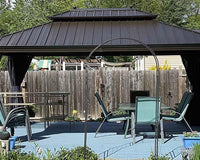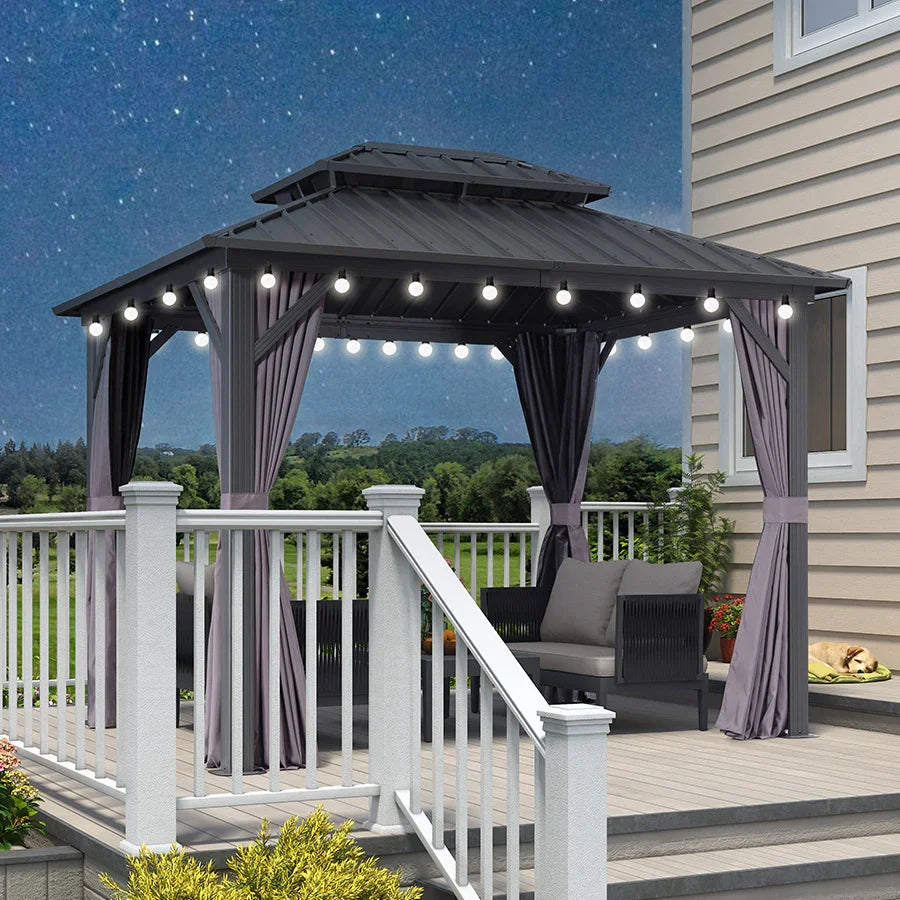
A hardtop gazebo winter setup can stay up in some climates, but not as a blanket rule. The right answer depends on the model's design, anchoring, roof shape, and your local snow conditions. Treat snow load as a structural limit, not a generic weather label, and use manufacturer guidance plus local snow information before you assume year-round use is fine.

Can a Hardtop Gazebo Stay Up in Winter?
A hardtop gazebo may stay installed through winter when the specific model, its anchoring, and the expected snow conditions are compatible. That is the key filter. If the roof is carrying repeated snow or ice, or if the frame is already shifting, the safe answer changes fast.
For that reason, start with two checks: the manufacturer's winter guidance and your local snow-load conditions. Check your local snow load with an official tool before the first major storm, and use ASCE snow load provisions as the engineering reference behind that check. If exact capacity data is unavailable, keep the answer local-condition based and refer readers to manufacturer guidance and official snow-load tools.

If those two checks do not line up with the gazebo's design, do not treat the structure as winter-ready just because it is made of metal. The label matters less than the actual load path, anchoring, and maintenance plan. For a broader year-round-use explanation, see year-round winter use.
Check the Roof, Frame, and Anchoring
Before winter weather arrives, inspect the gazebo in three places: the roof, the frame connections, and the anchoring points. Those are the parts most likely to show early trouble, and they usually reveal warning signs before a bigger problem becomes visible.
Roof Panels and Drainage Paths
Look for sagging, denting, seam gaps, or debris that could trap meltwater and then refreeze. A roof that drains poorly is more likely to hold uneven snow or ice at the edges, which raises the load on the panel seams. You do not need a repair to notice the warning signs, just a careful visual pass from the ground or another safe position.
Frame Joints and Fasteners
Loose bolts, shifting joints, rust spots, or frame wobble deserve attention before the first heavy storm. In metal structures, freeze-thaw can loosen joints, especially across repeated temperature swings, so a connection that looked fine in fall can become a problem later.
Anchoring and Ground Contact
Check whether posts, footings, or base plates still sit firmly where they should. Soft soil, frost, and repeated thaw can shift contact points gradually, even when the gazebo still looks square from a distance. Visible wobble, lifted anchors, or movement at the base means the structure should be rechecked, not ignored.
| Quick winter check | What to look for | Why it matters |
|---|---|---|
| Roof | Sagging, seam gaps, trapped debris, uneven meltwater | Points to uneven loading or drainage problems |
| Joints / fasteners | Loose bolts, wobble, rust, shifting connections | Often shows up before larger frame movement |
| Anchoring | Lifted base plates, soft ground movement, shifted posts | Winter loads can amplify small anchor changes |
| Visible deformation | Bent members or anything that no longer looks straight | A sign to stop treating the issue as routine maintenance |
Manage Snow and Ice Without Overloading the Roof
The safest approach is to clear early and clear gently. Do not wait for a deep buildup if you can remove light, loose snow after a storm. That lowers stress on the roof and keeps ice from forming thick layers that are harder to remove later.
- Check the roof after each meaningful snowfall, especially if snow is wet or drifting unevenly.
- Remove only loose snow with a soft, non-damaging tool if the manufacturer allows it.
- Avoid sharp tools, scraping, and forceful prying, which can scratch panels or dent edges.
- Do not use salt or chemical de-icers unless the manufacturer explicitly allows them, since they can damage metal finishes over time.
- If snow keeps drifting back or ice keeps building at seams, stop treating it as a routine cleanup and look for a better winter-fit setup.
If you are comparing a roof support option or browsing hardtop gazebo options, do that before another heavy storm rather than trying to push a borderline setup through the season.
Build a Simple Winter Care Routine
A short winter routine is easier to keep than a long one, and that matters because problems often show up between storms rather than during them. Use a quick pass after snowfall and again after thawing.
- Check for snow that has drifted unevenly across the roof.
- Look for visible ice at seams, edges, or drainage paths.
- Confirm that no new wobble appeared at the base or posts.
- Inspect fasteners for movement, looseness, or rust.
- Look for post-thaw drips that refreeze near joints or anchors.
- Make sure water is not pooling around the base after a warm spell.
- Recheck anything that changed after wind, thaw, or refreeze.
If you already follow a seasonal maintenance routine, pair this winter pass with your regular seasonal gazebo care so you catch both winter stress and normal wear before they compound.
When to Stop DIY and Get Help
Stop treating the gazebo as a routine winter maintenance job if you see visible bending, repeated ice loading, unstable anchoring, or movement that keeps returning after rechecks. Those are not signs to push harder with tools or quick fixes. They are signs to step back.
The first move should be manufacturer guidance, especially if the model's winter limits are unclear. If the frame is bent, the anchors have shifted, or the structure no longer looks stable, bring in a qualified installer or structural professional rather than guessing. If you are comparing winter-friendlier layouts, double roof gazebo options and hardtop gazebo options are the right places to start.
FAQs
Can You Leave a Gazebo Up in Winter?
Often yes, but only when the model, anchoring, and local snow conditions are compatible. The quickest check is simple: if the gazebo is built for the expected load and stays visually stable after storms, it is a candidate for winter use. If you see sagging, wobble, or shifting anchors, treat it as a no until you inspect further.
How Do You Winterize a Hardtop Gazebo?
Focus on the highest-value steps: inspect the roof and frame, secure the anchoring, clear drainage paths, and plan post-storm checks. The key is not a one-time prep task but a repeatable routine. If freeze-thaw is common in your area, the post-thaw recheck matters almost as much as the first prep.
What Snow Signs Mean the Roof Needs Attention?
Sagging, uneven buildup, seams that look stressed, and meltwater that refreezes at the edges are the main red flags. The useful boundary is whether the roof still sheds snow evenly. If one side keeps loading differently, or the roof begins to look distorted, that is a sign to stop assuming it is fine.
Can You Use a Snow Shovel or Rake on a Gazebo Roof?
Only if it is a gentle tool that will not scratch, dent, or pry at the surface. A soft-bristled broom or similar non-damaging option is safer than sharp tools. If you need to use force to clear the roof, the buildup is already beyond routine handling and the safer move is to back off.
When Should You Call the Manufacturer About Winter Damage?
Call when you see bent members, loosened anchors, repeated ice buildup, or any movement that returns after you recheck the structure. That is the point where generic winter advice is no longer enough. If the model's load limit or winter guidance is unclear, the manufacturer can tell you whether to keep using it, reinforce it, or stop.