Start your fall inspection in stable, dry conditions from a safe, ground-level position. Check salt residue, wind-driven rain paths, drainage, fasteners, fabric, nearby debris, and accessories in that order. Rinse or clean only as the model instructions allow, and record anything loose, shifted, wet, blocked, damaged, or difficult to reach. Exposure varies with distance from the shoreline, wind direction, shelter, rainfall, vegetation, and site drainage, so a coastal pergola does not have one universal maintenance schedule.

Coastal Pergola and Gazebo Fall Checklist
A practical fall inspection moves from safe observation to component care and documentation. The National Park Service recommends seasonal checks and another inspection after significant weather, while its drainage guidance emphasizes observing water flow from a safe position. Apply those principles conservatively to your specific structure, along with the seasonal fall inspection and your model instructions.
- Choose a stable inspection window. Start only after wind and rain have settled. Observe from the ground before considering a closer look. Stop if footing is unstable, elevated access is difficult, or the structure appears to be shifting or damaged.
- Look for salt residue and wet deposits. Check exposed frame surfaces, connectors, roof channels, corners, and nearby furnishings for visible film or residue. Record the location before rinsing with the approved method.
- Trace wind-driven rain. Follow the intended path from panels, louvers, seams, or roof edges into channels, gutters, and downspouts. Note staining, overflow, displaced covers, or water entering an unexpected area.
- Check drainage at ground level. Look below posts and outlets for pooling, erosion, overflow, or runoff directed toward the structure or home. Clear only loose, accessible material when the instructions permit it.
- Observe fasteners and connections. Look for missing or loose fasteners, shifted joints, unusual gaps, residue, damaged anchors, or movement around posts. Do not tighten, replace, or alter hardware unless the model instructions specify the procedure and parts.
- Inspect fabric separately. Check canopies, curtains, screens, covers, and attachment points for dampness, salt film, spotting, fraying, tears, or trapped leaves. Keep fabric care separate from frame care.
- Remove nearby loose debris. Clear accessible leaves, twigs, and windblown material from roof surfaces, channels, corners, fabric, and the surrounding area. Check whether trees, planters, furniture, covers, or stored items hold moisture, block access, or redirect water.
- Prepare permitted accessories. Retract, remove, store, or secure curtains, screens, covers, furniture, and other adjustable items only as their individual instructions allow. Do not add unapproved bracing or tie-downs.
- Record the baseline. Photograph or note residue, staining, blocked paths, movement, wet areas, and damaged attachments. Recheck after significant rain or unusually high winds, and use the record to decide whether routine care is still appropriate.
Adjust Your Salt-Air Rinse Routine to Exposure
Rinse a coastal pergola or gazebo when visible salt residue or exposure to salty wind and spray gives you a reason to inspect—not because an unsupported calendar interval says it is time. Salt-laden, wind-driven moisture warrants attention to exposed metal, connectors, fasteners, and coatings, but FEMA does not establish a corrosion rating or predict failure for a particular structure.
Use these signals together rather than treating distance from the ocean as a cutoff: shoreline openness, prevailing wind direction, shelter from buildings or vegetation, recent rain, visible spray or residue, component location, and nearby debris. An open-facing roof edge or channel may need closer observation than a sheltered surface at the same property. A sheltered site can still collect leaves and retain moisture around drainage paths.
When residue or exposure calls for cleaning, let the product instructions control the cleaner, water pressure, rinse direction, and treatment of finishes, fasteners, fabric, and furnishings. Direct runoff away from the structure where the site and instructions support it, and keep moisture-sensitive accessories dry. This is the practical basis for fall maintenance for coastal pergolas without inventing a fixed every-X-days rule or an ocean-distance schedule.
Inspect Roof Paths After Wind-Driven Rain
Trace wind-driven rain through the structure’s intended roof path after conditions stabilize. Start at roof panels, louvers, seams, or edges and follow water toward channels, gutters, and downspouts, then observe where it reaches the ground. Proper roof drainage should carry water away rather than create unexplained overflow or wet areas, but the exact path is model-specific.
Look for blocked outlets, displaced covers, staining, unexpected overflow, or water entering an occupied area. Use the model instructions before adjusting louvers, covers, gutters, or channels. For background reading on a related inspection, see our storm-damage inspection guide, but do not treat general advice as permission to modify your structure.
Do not inspect exposed elevated roof areas during wind or rain. A ground-level observation can identify a changed water path, but it cannot confirm that a leak or structural issue is resolved.
Clear Drainage Paths and Check for Pooling
A drainage check is complete when accessible paths are clear under the approved method and water is not persistently pooling, overflowing, eroding the ground, or being directed toward the structure or home. Inspect channels, gutters, outlets, and downspouts for leaves, sediment, salt residue, and other blockages.
At ground level, inspect around posts and below outlets for standing water, washout, staining, or redirected runoff. Clear only removable material covered by the model instructions. If pooling, overflow, or intrusion continues after an approved clearing step, treat it as a drainage problem requiring product guidance or qualified assessment—not as proof that cleaning fixed it.

Remove Leaves and Debris Before They Trap Moisture
Clear loose, accessible fall debris before it blocks a water path or keeps fabric and connections damp. Remove leaves, twigs, and windblown material from roof surfaces, channels, corners, curtains, covers, and the area around the structure.
Also inspect the setting around the structure. Trees can shed material, planters can hold moisture, and furniture or covers can block outlets or make connections harder to observe. Recheck after windy weather. Do not climb, pull on branches, or move heavy, lodged, or unstable material as routine care. Arrange appropriate help for anything elevated or unsafe to handle.
Check Fasteners, Joints, and Anchors for Change
Inspect visible hardware for changes rather than trying to prove its long-term performance. Salt-air maintenance for an aluminum pergola should include exposed fasteners, joints, anchors, coatings, and connections because salt-laden moisture can affect exposed metal components. Look for missing or loose fasteners, shifted joints, unusual gaps, residue, damaged anchors, and movement around posts.
Document what changed and compare it with the assembly and maintenance instructions before tightening or replacing anything. Use only the specified adjustment procedure and replacement parts. Do not substitute generic hardware or alter anchors based only on appearance. Visible movement or a damaged connection moves the task beyond routine owner care.
Clean, Dry, and Store Fabric Components
Treat fabric and attachment points as a separate care job. Inspect canopies, curtains, screens, cushions, and covers for salt film, dampness, spotting, fraying, tears, and trapped leaves. Follow each care label or model instruction for cleaning, drying, retracting, folding, and storage rather than applying a general fabric treatment.
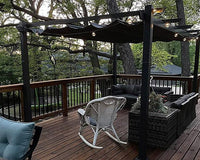
Dry fabric before retracting, covering, folding, or storing it unless the instructions specifically say otherwise. Do not close up wet, debris-laden material or force it into storage when attachments are damaged. If a canopy-and-curtain setup fits your patio, our retractable pergola with curtains illustrates why the canopy, curtains, attachment points, and aluminum frame need separate checks. Its listing identifies a retractable polyester canopy and curtains; those product facts are not a general coastal-weather promise.
Match the Fall Check to a Pergola or Gazebo
The roof configuration and installation layout determine which parts deserve closer observation. Use this comparison to prioritize the check, then let the model instructions control the actual procedure.
| Structure type | Inspect more closely | Instruction boundary |
|---|---|---|
| Open or louvered roof | Louvers, pivots, channels, seals, and drainage paths | Do not force or adjust moving parts without following the model procedure |
| Fixed hardtop | Seams, panel connections, gutters, downspouts, and debris accumulation | Use the specified inspection and clearing method for the roof system |
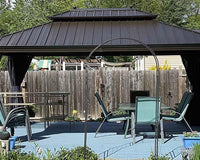
| Attached fabric | Canopy, curtains, screens, attachment points, and trapped moisture | Follow the fabric label for cleaning, drying, retraction, and storage |
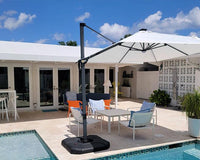
| Wall-mounted or freestanding installation | Wall or post connections, outlet direction, ground pooling, and access around the structure | Use the installation instructions; do not assume identical drainage or connection requirements |
For a product-specific example, the adjustable louvered pergola listing identifies adjustable louvers, an aluminum frame, and a drainage system. Those listed features explain why roof movement and drainage deserve attention on that model—not why every aluminum pergola has the same coastal performance.
Secure Accessories Before Unsettled Fall Weather
Prepare only removable or adjustable accessories covered by their instructions. Retract, remove, store, or secure canopies, curtains, screens, covers, furniture, and loose items when the instructions permit it. Check that an accessory does not hold water or leaves, block a drainage path, or create a new access problem.
After significant weather, wait for stable conditions and compare the structure with your recorded baseline. Look for displaced roof or channel parts, loose or damaged connections, torn attachments, intrusion, pooling, and debris. FEMA recommends monitoring changes from the baseline and repairing observed coastal damage before the next storm season; use that principle as a documentation and escalation trigger, not as a promise of storm protection.
When Routine Care Should Stop
Use this three-way decision: continue only with safe, instruction-approved care; document and recheck an unclear change that remains within the instructions; stop and consult when the finding exceeds routine access or care. FEMA’s monitor-inspect-repair framework supports documenting changes and addressing damage, while the coastal facilities guidance is not a substitute for model-specific repair directions.
Routine care includes approved rinsing, accessible debris removal, drying, storage, and observation. Document and recheck residue, staining, or a minor accessible blockage when the model instructions explain the next step. Stop routine maintenance for structural movement, damaged anchors or connections, persistent pooling or water intrusion, displaced components, torn load-bearing attachments, inaccessible damage, unsafe access, storm-related damage, or unclear procedures.
Make the decision before leaving the structure: if the check shows only approved routine care, record it and recheck after significant weather or when visible salt, debris, or moisture buildup returns. If it shows damage, movement, persistent intrusion, or unsafe access, stop and contact qualified service before continuing.
FAQ
These answers address common fall questions without turning coastal exposure into a fixed maintenance schedule.
How do you protect a pergola near the ocean in the fall?
Wait for stable conditions, observe from a safe position, remove approved debris and residue, trace drainage, and inspect hardware and fabric before normal use. Follow the model instructions for cleaning, and consult qualified service for movement, damage, unsafe access, or unclear procedures.
Does salt air damage outdoor furniture, pergolas, and gazebos?
Salt-laden moisture changes what deserves attention, especially exposed surfaces, connectors, drainage paths, fabric, and nearby furnishings. It does not show that every material, finish, or structure will corrode or fail in the same way, so use component-specific instructions.
How often should a coastal pergola or gazebo be rinsed?
Use visible residue, salty wind or spray, recent rain, shelter, debris, component location, and the product instructions as triggers. The available evidence does not support an every-X-days schedule or a universal ocean-distance cutoff.
What should I check after a coastal storm near my pergola or gazebo?
After conditions stabilize, compare the structure with its baseline. Look for displaced roof or channel parts, blocked drainage, pooling, loose or damaged connections, fabric damage, and intrusion. Stop routine care if damage is present or access is unsafe.