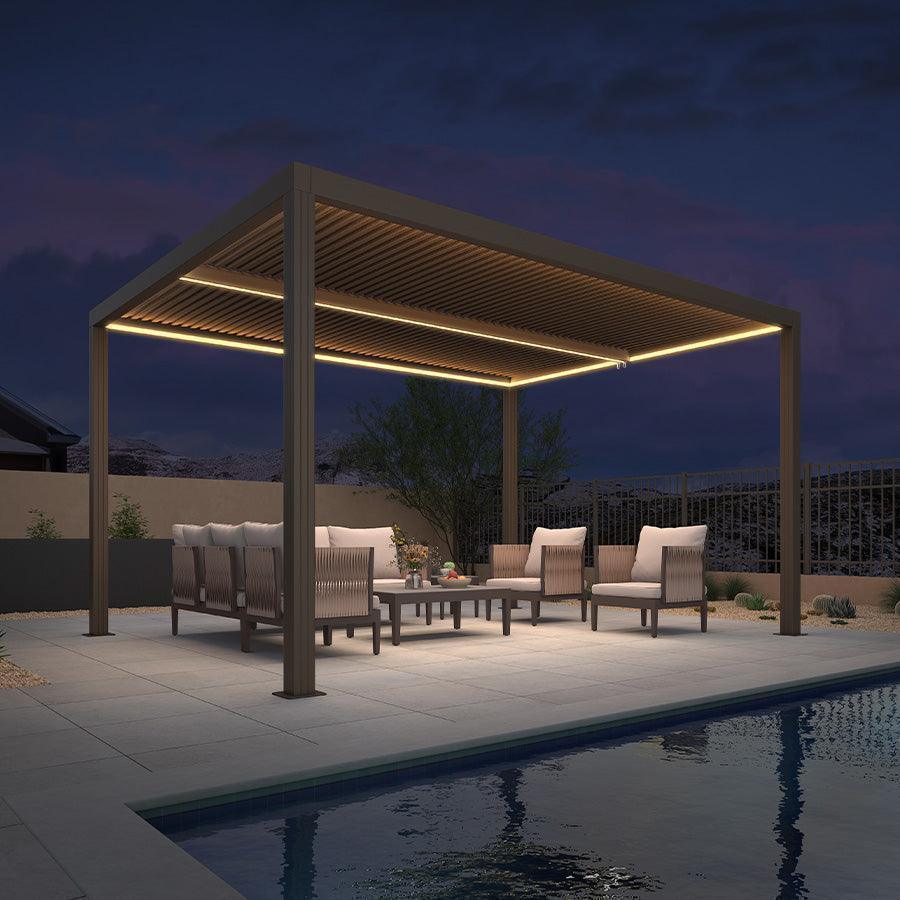
The value of a budget aluminum pergola comes down to one question: are you paying for a better outdoor experience, or mostly for a better finish and fewer annoyances? In many cases, the extra money buys more consistent coating, tighter hardware, quieter operation, and more peace of mind after delivery. A budget model can still be a great choice for a typical patio, but the trade-offs become more apparent in exposed sites, high-visibility entertaining spaces, and DIY installs where every loose part or uneven seam stands out.

What Changes Between Budget and Premium
This comparison makes the main trade-offs easier to spot. Budget pergolas usually start with simpler finish and hardware expectations, mid-range narrows the gap, and premium models generally prioritize coating durability, refinement, and support. Use the table below as a buying guide, not a performance ranking.
| Tier | Finish Quality | Hardware Feel | Noise Tendency | Install Complexity | Water Management | Support Expectations |
|---|---|---|---|---|---|---|
| Budget | Basic | Simpler | More likely to rattle in wind | More hands-on | Functional, but basic | Variable |
| Mid-range | Better | More consistent | Middle ground | Moderate | Good balance | More consistent |
| Premium | Uniform | Refined | Often the quietest | Site-dependent | Sophisticated design | Higher confidence |
The biggest visible gap is often the finish. Standard aluminum pergolas typically start at a basic powder-coat baseline, while premium systems often move to a higher-grade architectural coating designed for better color and gloss retention in tougher conditions. This doesn't make every premium frame perfect, but it explains why the surface often looks more uniform and holds up better in a high-traffic backyard setting.

Premium pricing also reflects a more demanding design context. In practice, you are often paying for fewer compromises in finish, fit, and the overall "feel" of the structure once it is assembled.
Where Budget Pergolas Usually Compromise
Finish and Powder Coating
Budget systems usually make their cost-savings visible in the surface. You may see simpler coating specs, less uniform color, or finish wear that appears faster on edges and contact points. This matters most if the pergola sits in direct sun, is washed frequently, or serves as a focal point for your patio. If the structure is tucked away or used mainly for casual shade, the finish gap is often easy to overlook.
Fit, Fasteners, and Alignment
Lower-priced kits are more likely to show uneven seams, panel gaps, or a less solid feel after assembly. This doesn't mean the pergola is unusable, but it can require more tinkering during installation and occasional re-tightening. If you’re the type of person who notices every gap or wobble, this is where the value difference becomes most obvious.
Louver Feel, Drainage, and Noise
This is where daily comfort comes into play. Many owners report rattle and noise issues in windy conditions, especially with lighter DIY kits. Additionally, while louvered roofs manage rain, they aren't always 100% watertight. If you want a quiet space for dining or evening conversation, the quality of the roof system matters more than the marketing photos suggest.
Install Experience and Missing Parts
A budget kit might save you money upfront but cost you more in setup time. Reviewers often mention spending extra time sorting parts, aligning components, and deciphering manual steps before the frame feels secure. That hidden labor is part of the real price. If you want your first weekend project to go smoothly, packaging quality and clear instructions are just as important as the sticker price.
What Premium Systems Add
Heavier, More Refined Hardware
Premium pergolas usually feel more substantial because the hardware and frame details are more robust. The goal isn't just strength on paper, but a tighter, more secure feel when the louvers move and accessories are attached.
Cleaner Motion and Quieter Operation
A better fit between parts reduces wobble, clatter, and resistance during everyday use. While site exposure still plays a role, premium systems generally offer a smoother, quieter experience. If your pergola is right next to your dining table, this quiet operation can be worth more than any flashy add-on.
Better Finish Consistency
Premium systems justify their price with finish consistency and higher-grade coatings that look uniform at joints, edges, and visible seams. If you want the structure to look like a permanent, built-in feature rather than a temporary kit, this consistency makes a big difference.
Stronger Buying Confidence
The premium tier often comes with better documentation, a more complete ecosystem of accessories, and the sense that the product was engineered for long-term use. It doesn't eliminate every setup challenge, but it does reduce the number of unpleasant surprises after delivery.
Are Budget Aluminum Pergolas Worth It?
Yes, if you are buying for basic shade, a standard backyard patio, and a strict budget. A mid-market pergola is a great fit when the space isn't extremely exposed and you’re comfortable accepting some minor finish or hardware trade-offs. The value proposition weakens when the pergola is highly visible, wind-exposed, or expected to feel like a high-end, custom-built feature from day one.
Ultimately, the question isn't whether a budget pergola is "good," but whether it’s right for your specific site. If you are sensitive to rattling, want a flawless finish, or don't want to spend your weekend sorting parts, premium is the way to go. If you just want shade and a usable outdoor room, budget is often the smarter buy.
If you want a broader material comparison, checking out louvered vs. retractable pergolas is a helpful next step, as the roof style significantly changes the maintenance and weather flexibility of your space.
How to Choose the Right Tier
- Check your site. Open patios, deck edges, and windy yards put more pressure on fit, noise, and water management than a sheltered corner.
- Decide what you'll notice. If rattling, uneven seams, or a less polished finish would bother you every week, move up a tier.
- Compare what is included. Accessories, lighting, and side panels can change the real value more than the base frame price.
- Estimate your install tolerance. If you want a smoother first weekend, don't ignore the hidden labor involved in sorting, alignment, and rework.
- Match the pergola to the space. Browse 12 x 12 pergola kits or 11 x 14 pergola kits to see what size fits your footprint before you buy.
- Check the add-ons last. If privacy, shade control, or lighting matter, louvered pergola accessories may be just as important as the base kit.
Final Takeaway
Budget aluminum pergola value is strongest when you want shade, a functional patio upgrade, and a lower upfront price. Premium systems earn their cost through better coating specs, cleaner fit, quieter operation, and more confidence in the final result. Before you buy, compare size, accessories, and site exposure first, then choose the tier that matches how visible and frequently used the space will be.
FAQs
Are Aluminum Pergolas Worth It?
They are worth it when you want a low-maintenance frame and can accept some trade-offs in finish or refinement. They are best for typical patios with moderate exposure where usable shade is the priority. If the pergola is a major focal point, premium is easier to justify.
What Do Premium Aluminum Pergolas Usually Add?
Premium models add better finish consistency, sturdier hardware, and a more refined user experience. This matters most in visible, high-use spaces. The key is deciding if fewer annoyances and a cleaner look are worth the premium price.
Why Do Some Budget Pergolas Rattle or Leak More?
Rattle usually comes from lighter parts or looser tolerances. "Leak anxiety" is common; while louvered roofs manage rain, they aren't all equal in how they handle runoff. If your site is open or windy, look for a structure specifically engineered for water management.
Can a Mid-Range Pergola Be Good Enough for Regular Backyard Use?
Yes, especially for standard patio use where the pergola isn't the main architectural feature. Mid-range systems are often the sweet spot if you want better quality than the cheapest kits without the top-tier price tag.
How Should I Decide Between Purple Leaf and a Premium Option?
Start with your tolerance for setup friction, finish variation, and hardware detail. If you want a practical path to compare sizes and accessories first, shop by the footprint that fits your patio, then decide if the premium tier adds enough extra refinement for your needs. If not, a well-matched mid-market kit is likely your best value.