
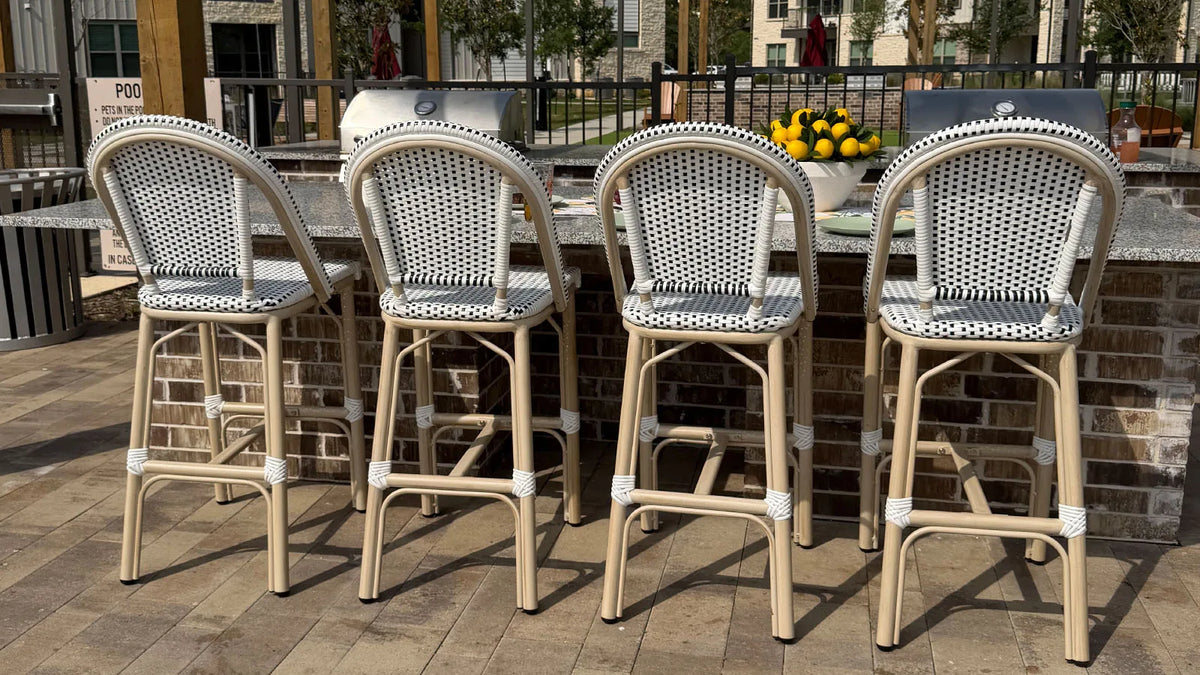
A high top patio set works for a winter cocktail party when the table fits your space, the stools support comfortable sitting, and the route indoors stays clear. Before choosing a style, measure with seats pulled out, match the table and seat heights, and plan a separate serving spot. Winter adds a few decisions: where cushions will stay dry, how wind affects the patio, and when to move inside. Choose around those needs before deciding how many seats to buy.
Measure Your Cocktail Zone Before Choosing Seating
Measure the space you need during the party, including occupied stools and standing conversations. Furniture dimensions alone cannot show how easily you can carry a tray past a seated guest.
Use removable tape suitable for your patio surface to mark the tabletop and stool footprints. Include projecting legs and footrests. Mark the drink station, open the exterior door fully, and trace the routes to the kitchen, grill area, and restroom.
Place an existing chair beside the taped outline. Have someone sit while you pass behind with an empty tray, then repeat with the chair pulled back. Move the outline if either position blocks your route.
For a four-person planning example, consider a square table with one stool on each side. Place it away from the door’s swing, with a separate serving surface along a nearby wall. Keep the route from the kitchen to that surface outside the occupied seating area.

Test this arrangement using the actual furniture dimensions before buying. It is a planning example, not a guaranteed fit for every patio. Check that you can approach each stool without stepping over a table leg or squeezing between furniture.
A high top patio set suits a gathering that alternates between sitting and standing. Leave somewhere to chat beside the table without occupying the main walkway. On a narrow patio, fewer stools may make the space easier to use.
Choose a Table Height and Stool Height That Work Together
Match the table and stools by measurement. Counter and bar labels describe common height categories, but the space above the seat and the supports beneath the table determine usable legroom. Our comparison of bar, counter, and dining heights shows where each label usually lands.
| Option | Common Tabletop Height | Common Seat Height | Gathering Style |
|---|---|---|---|
| Counter height patio set | About 34 to 36 inches | About 24 to 26 inches | Seated drinks and conversation with occasional standing |
| Bar height patio set | About 40 to 42 inches | About 28 to 30 inches | A taller gathering point for alternating between sitting and standing |
These ranges narrow your search; not every combination within a row will fit. Follow the manufacturer’s pairing guidance and check the exact dimensions.
Subtract seat height from tabletop height for an initial comparison. A 36-inch table with a 25-inch seat gives an 11-inch difference. A 42-inch table with a 30-inch seat gives 12 inches. Neither calculation accounts for a table apron, cushion thickness, or your seated position.
Next, measure to the lowest obstruction above your thighs. Confirm that armrests clear the underside if you want to tuck stools away, and that your feet reach the footrest without stretching.
Our Hailar stools with backs and cushions have listed seat heights of 24.8 inches for the counter version and 28.74 inches for the bar version. Against a 36-inch tabletop, the counter version gives an initial difference of 11.2 inches. Check underside clearance and how the seat measurement accounts for the cushion before pairing.
For four seated places, arrange four small plates and glasses on an existing surface matching the proposed tabletop size. Include elbow room. For a larger circulating party, a high top patio set can serve as one conversation area without providing a stool for every guest.
Prioritize Seating Details for a Longer Visit
Choose seating around how you expect to spend the evening. A short outdoor drink before dinner places different demands on a stool from an extended conversation at the table.

When comparing outdoor high top table and chairs, sit in a winter coat. Reach toward the table, lean back, rest your feet, and stand again. Notice if the coat catches between the armrests or the seat edge presses behind your knees.
Outdoor bar stools with backs give you somewhere to lean, provided the seat depth lets you reach the backrest while keeping your feet supported. If leaning back pulls your feet off the footrest, try a different seat depth or footrest position.
Armrests provide a resting place but also increase width. Check both your sitting space and the room between neighboring stools. A wide chair may feel comfortable alone yet crowd the table when all four seats are occupied.
Cushions should stay in place as you move. Check the attachment method and how easily you can remove them after the party. Swivel seats need enough turning room to avoid striking the table or another chair.
Compare outdoor bar stools using the needs your sit test identifies. For frequent standing, easy entry and exit may matter most. For longer seated visits, give greater attention to back support, seat depth, and footrest position.
Build a Serving Layout That Keeps Guests Moving
Keep the high table available for drinks and small plates. Put mixing, replenishment, and larger food dishes on a separate surface so a refill does not require reaching between occupied seats.
For the four-person example, give each seat a glass, a small plate, and a napkin. Add one modest shared snack dish in the center. If those items crowd the table, move the shared dish to the serving surface.
A patio cocktail table and stools should not become the only place to prepare drinks, collect empty plates, and serve appetizers. If you are planning more than one zone, our guide to outdoor dining layouts shows how the pieces fit together. Divide those tasks between nearby surfaces:
- Use the high table for personal drinks, plates, and conversation.
- Keep bottles, mixers, and larger dishes on a stable serving table.
- Place a tray for used glasses near your return route indoors.
Position the serving table where you can replenish it without passing through the seated group. Keep it outside the door’s swing and any clearance required around cooking equipment. Put frequently used supplies toward the accessible edge.
A small outdoor cabinet can hold napkins, cups, and utensils. Store spare cushions there only if the compartment is suitable and dry. You should be able to retrieve supplies without moving an occupied stool.
Walk the finished arrangement with a tray before arrival. If the high top patio set forces you to sidestep a chair on every trip, change the serving position.
Prepare the Patio for Changing Winter Conditions
Plan for conditions at your patio throughout the gathering. A dry afternoon can become a damp, windy evening, so check the forecast through your expected finish time.
Inspect the surface during daylight. Remove wet leaves, address standing water, and check steps and thresholds. Set furniture on a stable, level surface according to its instructions. Stop using any stool that rocks or has loose parts until the problem is resolved. Our guide to fixing a wobbly bar stool covers the usual causes.

Before purchase, read the care requirements for the frame, tabletop, woven surfaces, and cushions separately. Material names alone do not establish winter suitability. Confirm approved cleaners, drying requirements, cover use, and storage instructions for the exact model.
Bring cushions out shortly before use. Afterward, clean spills using the specified method and let damp components dry as directed before storage or covering. Outdoor fabric does not automatically permit prolonged wet exposure, and a cover may not replace winter storage.
For winter patio entertaining, check hourly temperatures, gusts, precipitation, and local alerts. Account for wind chill, since wind increases heat loss from exposed skin. Alcohol is not a way to stay warm and can reduce shivering, one of the body’s natural responses to cold.
Move indoors during strong winds, snowfall, icing, dangerous cold, or conditions prohibited by the furniture instructions. There is no single comfortable temperature for every gathering.
Keep an indoor table available before arrival. Check outdoor lighting after dark, with cords clear of walking routes. If you cannot keep the patio dry, stable, and comfortable, hold the party inside.
Choose a High Top Patio Set That Suits Your Winter Hosting Style
Choose a high top patio set after testing the occupied footprint, comparing table and seat heights, and planning where serving supplies will go. For four seated guests, prioritize usable tabletop space and supportive stools. For a circulating party, preserve standing room and easy access indoors. Narrow your seating options by the backrests, footrests, and armrests that felt comfortable during your sit test. Confirm the care requirements and weather plan before buying, so the furniture suits both your gathering and your winter routine.
FAQs
Can I Mix a High Top Patio Set With Lounge Seating?
Yes. Use the high table for drinks and short conversations, with lower seating available for resting. Give both areas a suitable surface for glasses, and preserve a clear connecting path so changing seats does not interrupt either group.
Can a High Top Patio Set Be Used Near a Fire Feature?
Only if the layout meets the fire feature, heater, and furniture manufacturers’ clearance requirements and local fire rules. Measure from the closest furniture component, including cushions. Ask your local fire authority about an uncertain setup before using the equipment.
Is High Seating Suitable for Every Guest?
No. Provide a stable lower chair and suitable table if getting onto a tall stool would be difficult or uncomfortable. Ask about seating preferences before hosting so using a raised seat is optional and everyone can join the conversation.
Should I Assemble the Furniture Before Party Day?
Yes. Assemble it early enough to inspect the parts, follow the tightening instructions, and resolve missing hardware. Keep the packaging until you have checked the complete set, and allow time to report damage or request replacement parts before hosting.
How Can I Protect My Patio Surface From Stool Marks?
Check the stool’s feet for intact protective caps and trapped grit. Use replacement glides approved for the stool and suitable for your patio material. Lift furniture when moving it, and avoid adding pads that make a tall stool unstable.


Comments