Step into a Spanish patio, and you are instantly transported to a world of warmth, history, and relaxed elegance. More than just a backyard, this design philosophy creates an outdoor sanctuary that feels like an extension of the home. Rooted in centuries of Mediterranean and Moorish traditions, Spanish patio design blends rustic materials, vibrant tiles, and lush greenery to create intimate gathering spaces.
Whether you have a sprawling garden or a small courtyard, understanding the core elements of this style can help you decide if this timeless aesthetic is the right fit for your lifestyle.
What Is Spanish Patio Design?
At its core, Spanish patio design is about creating a cool, shaded retreat from the sun. Historically, homes in Spain were built around a central open-air courtyard to promote airflow and provide privacy. Today, this concept translates into a walled or semi-enclosed outdoor room that prioritizes comfort and social connection.
The aesthetic is unmistakable. It is characterized by earthy terracotta floors, whitewashed stucco walls, and intricate wrought-iron details. The vibe is "rustic chic"—it feels lived-in and welcoming rather than sterile or overly manicured. It is a space designed for leisurely meals, afternoon siestas, and late-night conversations under the stars.
Use Authentic Materials and Textures
To achieve the look, you must start with the foundation. Spanish design relies heavily on natural, durable materials that age beautifully.
The Floor: Terracotta and Stone
The most iconic element is the flooring. Saltillo tiles—handmade terracotta tiles from Mexico—are a staple. Their warm, reddish-orange hues ground the space and retain heat in the evening while staying cool during the day. Alternatively, natural flagstone or patterned cement tiles can be used to add texture and visual interest. Avoid perfect, high-gloss finishes; the charm lies in the slight imperfections and matte surfaces.

The Walls: Stucco and Iron
Vertical surfaces are just as important. Crisp white stucco walls reflect sunlight, keeping the patio bright and airy. They serve as a perfect canvas for climbing plants and colorful decor. Accents of black wrought iron—in the form of gates, window grilles, or light fixtures—provide a striking contrast and a nod to the Moorish influence that permeates Spanish architecture.
Incorporate Water Features for Ambiance
In the hot, dry climate of Spain, water is a symbol of life and luxury. A Spanish patio is rarely complete without the sound of trickling water.
Fountains as Focal Points
A central fountain is often the heart of the design. It can be a grand, tiered stone structure or a simple wall-mounted basin adorned with colorful Talavera tiles. The sound of water creates a cooling psychological effect and masks urban noise, enhancing the sense of sanctuary.

Tiled Accents
Even if you don't install a fountain, water themes appear in the tile work. Moorish-inspired geometric tiles in shades of deep blue, turquoise, and green are used on stair risers, tabletops, and wall niches. These splashes of "water colors" break up the earth tones and add a vibrant, refreshing energy to the space.
Select the Right Plants and Greenery
A Spanish patio is a garden room. The planting strategy is lush but controlled, often using pots and vertical space rather than sprawling lawns.
Potted Gardens
Because many traditional courtyards are paved, plants are introduced in terracotta pots of varying sizes. This allows for flexibility in layout and adds layers of height. Geraniums, bougainvillea, and succulents are classic choices that provide bursts of intense color against the neutral background.

Scent and Shade
Fragrance is a key component. Citrus trees (lemon, lime, orange) planted in large urns not only look beautiful but fill the air with a sweet scent. Climbing vines like jasmine or trumpet vine are trained up trellises or pergolas to provide essential shade and soften the hard architectural lines. The goal is to create a sensory experience that engages smell as well as sight.
Choose Furniture and Decor
Furniture in a Spanish patio is substantial and inviting. It is meant to withstand the elements while looking elegant.
Rustic Wood and Iron
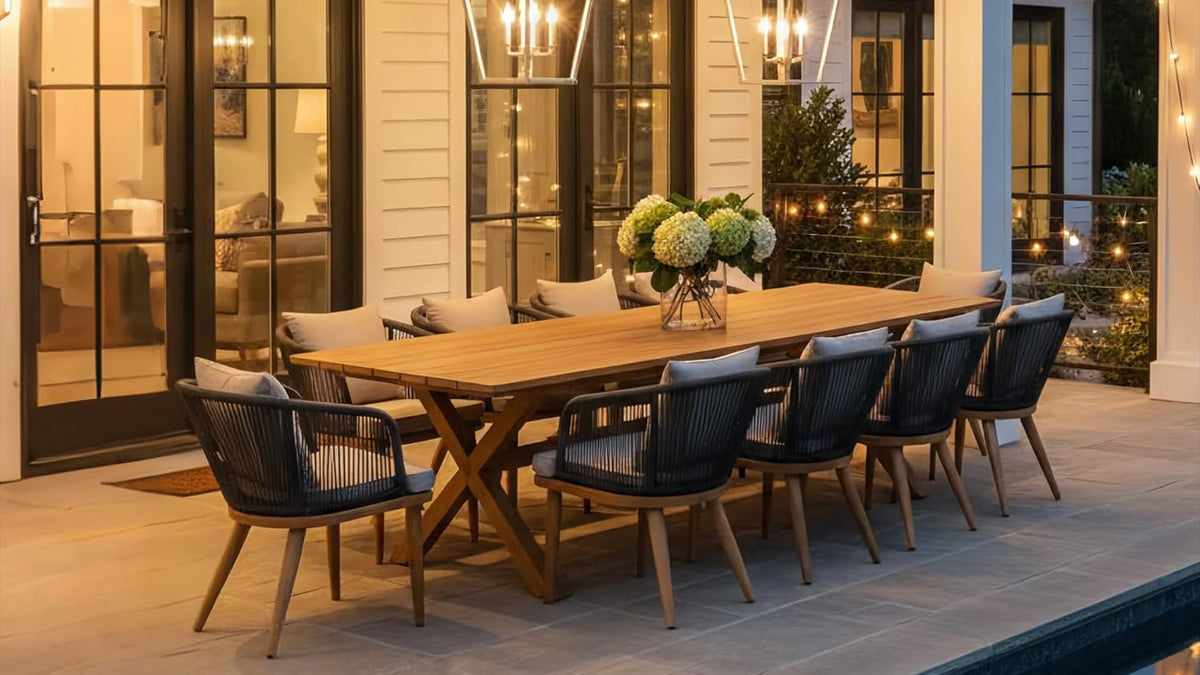
Heavy wooden tables, often made of teak or mesquite, anchor the dining area. They are paired with wrought-iron chairs fitted with comfortable cushions. The mix of wood and metal reinforces the rustic-elegant theme.

Textiles and Lighting
To soften the hard surfaces, use plenty of outdoor textiles. Throw pillows in rich reds, yellows, and blues add comfort and color. For lighting, lantern-style fixtures are essential. Hang iron lanterns from the pergola or place them on the floor to cast a warm, flickering glow at night. String lights draped overhead can mimic the feeling of a village plaza during a festival.
Is Spanish Patio Design Right for You?
Before you start laying tile, it is important to see if this style aligns with how you actually live. Spanish design isn't just a look; it supports a specific lifestyle.
Ideally Suited for the "Host with the Most"
If your perfect Saturday night involves hosting a dinner party for eight friends with tapas and wine, this layout is your best friend. The hardscape (paved floor) makes it easy to move chairs around and clean up spills. There is no wet grass to ruin shoes, and the built-in ambiance of the fountain sets the mood instantly. It turns your backyard into an event space.
Perfect for Small-Space Dwellers
Do you have a small urban yard or a townhouse courtyard that feels cramped? Spanish design thrives in small footprints. Instead of trying to force a lawn where it won't grow, you can embrace the walls. By adding climbing vines and a small bistro table on terracotta tiles, you turn a "cramped box" into a "cozy secret garden." It is a brilliant solution for maximizing limited square footage.
A Haven for Low-Maintenance Gardeners
If you love plants but hate mowing the lawn, this is for you. The "potted garden" approach means you can have lush greenery without ever needing a lawnmower or edger. You control the soil quality in the pots, which means fewer weeds. While you still need to water, installing a simple drip system into the pots makes it almost hands-off.
The Privacy Seeker
If your neighbors are close and you feel exposed, the Spanish emphasis on walls, trellises, and tall potted plants creates a natural privacy screen. It allows you to have coffee in your pajamas on Sunday morning feeling completely secluded, even in a busy neighborhood.

Start Your Spanish Patio Transformation
The spanish patio design are a reflection of the love people have for living outdoors. The incorporation of the warmth of nature with color and the serenity of nature is what makes patio styles from Spain so beautiful. You could turn your boring backyard into your personal Mediterranean oasis just by incorporating stone, water, and seating elements. If you are someone who likes relaxation, entertaining, and beauty, then this style is just what you need.
FAQ
Q1: Can I create a Spanish patio in a cold climate?
Yes, but use materials that are frost-resistant. The typical Saltillo tile will break when a freeze cycle occurs, so use porcelain tiles that resemble terracotta tiles but are designed for a cold climate. You will also need to move potted citrus trees into a warm area when winter arrives.
Q2: Do I need a wall to have a Spanish patio?
No. You can always achieve the enclosure through the use of hedges, a pergola, or privacy screens. The goal is intimacy; the objective of intimacy does not have to involve the use of a brick wall.
Q3: What colors define the Spanish style?
Consider the sunset. Terracotta orange, deep red, mustard yellow, and crisp white offer the basic colors. Blues and greens of the Mediterranean, as used in the tiles and plants, add the accent colors.
Q4: Is it high maintenance?
Maintenance of the hardscape (ground surfaces and walls) is easy. Additionally, the “potted garden” theme requires regular watering because planters tend to dry out more quickly than soil on the ground. A drip irrigation system would eliminate that hassle.