Protecting resin wicker patio furniture from intense desert sun and heat starts with cutting direct UV exposure, not reaching for a coating first. Clean the weave gently, dry it completely, then move the furniture into shade or under a structure like a small pergola during the hottest hours. Covers and UV protectants can help after that, but only once you confirm they fit the material and pass a small spot test.
Key Takeaways
- Shade and placement are the first line of defense for outdoor wicker patio furniture in desert heat, not surface products.
- UV exposure and high heat can gradually stiffen and embrittle polyethylene, though no source sets an exact desert threshold or lifespan.
- Clean with mild detergent and water, rinse, and dry fully before covering or treating the weave.
- Test any UV protectant on a hidden spot first, and stop use if strands turn brittle or crack.
- A small pergola or fitted cover only cuts exposure where its coverage actually reaches the furniture.
A practical desert-sun routine for resin wicker
The fastest way to protect resin wicker in a desert climate is to follow one repeatable sequence instead of guessing at treatments. Work through these steps in order, then repeat the cycle as conditions change.
- Inspect the weave and frame for dust, fading, or soft or brittle spots before you clean anything.
- Remove loose dirt and debris with a soft brush or a vacuum attachment.
- Wash with mild detergent and water, using a soft cloth or sponge rather than anything abrasive.
- Rinse thoroughly and let the furniture dry completely in the shade.
- Reduce daily direct-sun exposure through placement, a small pergola, or another shade structure.
- Consider a UV protectant or cover only after confirming it is compatible with your specific material and finish.
This sequence lowers exposure and catches early damage; it does not guarantee a fixed service life. When your furniture's material, finish, or care label is unclear, follow the manufacturer's exact instructions instead of a generic routine.
Why desert sun and heat change resin wicker
Desert sun and heat can gradually change how polyethylene wicker looks and behaves, more through steady exposure than one dramatic event. Repeated heating and cooling through the day may add to that stress.
What UV and heat can change
UV exposure and higher temperature can accelerate changes in high-density polyethylene (HDPE), the plastic used in most resin wicker, including surface fading, stiffening, oxidation, and reduced flexibility, according to NIST research on HDPE photodegradation. In practical terms, fading is mostly a cosmetic shift, while stiffening and reduced flexibility are the changes worth watching, since they can eventually show up as brittle strands or small cracks at stress points like arms and corners. That connection is why shade and early inspection matter more than any single product.

What the evidence cannot tell you
- No study sets an exact desert temperature or UV level that will damage a specific wicker product.
- No source predicts how many years a given piece will hold up in your climate.
- Fading alone does not confirm structural damage; it is a separate observation from brittleness or cracking.
Clean and inspect before the hot season
Cleaning resin wicker before the hottest months removes grit that can scuff the weave and lets you catch damage while it is still minor. Do this while the furniture is easy to move and inspect.
Clean without stressing the weave
- Brush or vacuum off loose dust and debris first.
- Wash with mild detergent and water using a soft brush, sponge, or cloth, following the kind of mild detergent and water cleaning guidance Iowa State University Extension recommends for seasonal outdoor furniture care.
- Rinse away soap residue and let the piece dry completely in a shaded spot before covering or treating it.
Inspect before the heat arrives
- Check every strand for color change, brittleness, cracks, splits, or loosened weave.
- Check joints, fasteners, and the frame for rust, looseness, or corrosion.
- Photograph problem areas so you can compare condition later in the season.
Choose shade, placement, covers, and airflow
The right shielding choice depends on how much direct sun the furniture gets, how much space you can realistically cover, and whether you still need easy access for cleaning. Compare your options by coverage and access, not by a single protection label.
Match the structure to the sun path
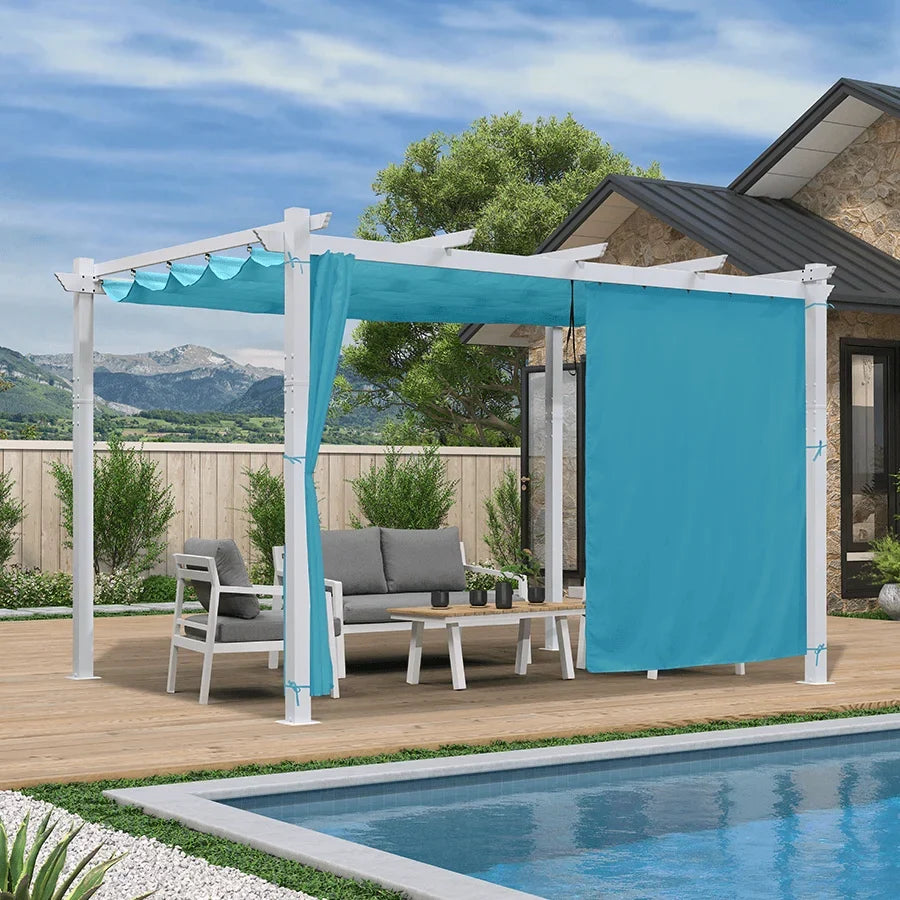
Furniture that sits in direct sun most of the day usually does best moved to a shaded corner or a covered patio. For seating you cannot relocate, a small pergola can screen it, but only when the canopy actually sits over the seating during the hours that matter most. Our retractable pergola has a retractable canopy, curtains, and a UV-resistant, fade-resistant canopy fabric, which makes it one practical shading option; its 10x10 to 10x13-foot sizes and 30 mph wind rating mean you should check your patio's footprint and local wind conditions before installing one.
Use covers without losing visibility
- Cover furniture only once it is clean and completely dry, so moisture does not get trapped underneath.
- Choose a cover sized and vented for your exact furniture, and follow its specific fit and care instructions.
- Pull the cover back whenever you need to inspect, clean, or dry the weave.
Use a UV protectant only after compatibility checks
No cleaner or UV protectant should be assumed safe for polyethylene wicker simply because it works on other outdoor materials. Confirm compatibility before treating the whole piece.
Verify before applying
- Identify the exact wicker material and finish, since resin, polyethylene, and painted wicker can react differently to the same product.
- Read the product label for approved surfaces and directions rather than assuming general suitability.
- Test the product on a small, hidden area first and let it dry fully before judging the result, following the manufacturer's clean-then-protect sequence shown for outdoor wicker cleaning and protection.
Know when not to continue
Do not use a protectant or coating to mask strands that already feel brittle or show cracks; a surface treatment cannot restore lost flexibility. Stop and switch to the furniture maker's repair guidance the moment you notice discoloration, tackiness, haze, or any other adverse change after testing.
When fading, drying, or cracking appears
Fading and structural damage call for different responses, so check which one you are actually seeing before you act. Color alone does not tell you whether the weave is still strong.
Fading versus loss of integrity
- Color change alone usually points to continued sun exposure rather than confirmed structural loss; keep cleaning and shading the piece and watch it over time.
- Brittle-feeling strands, cracks, splits, sharp edges, or a weave that feels loose call for a different, more cautious response.
The response when damage is visible
- Stop any optional cleaner, protectant, or coating on the affected area right away.
- Photograph the damage so you have a record to compare or share.
- Contact the furniture maker for repair or replacement guidance; if you are unsure whether the damage is serious enough to act on, our guide to signs of furniture damage walks through those markers in more depth.
Seasonal maintenance checklist and response plan
A short seasonal checklist keeps this routine repeatable without guesswork about timing. Use visible conditions and your area's hottest stretch as the trigger instead of a fixed calendar date.
Before the hottest period
- Inspect the weave and frame for existing wear.
- Clean, rinse, and dry the furniture completely.
- Set up shade, relocate the piece, or position a structure like a small pergola over the seating area.
During and after peak exposure
- Check that your shade or cover still reaches the furniture as the sun angle shifts through the day.
- Watch for new fading, stiffness, or cracking during the hottest weeks.
- Once the heat wave or season passes, clean off residue, dry the piece fully, and note any changes for next time.
FAQs
Can resin wicker stay outside all summer in a desert climate?
It can, as long as you actively manage its exposure rather than leaving it in full sun all season. Reducing direct sun with shade or relocation, keeping it clean, and checking the weave regularly matters more than any promised lifespan.

Should I soak resin wicker to keep it from drying out?
No. Soaking treatments used for some natural wicker do not apply to resin or polyethylene wicker, and there is no evidence that wetting the material restores flexibility. Follow your furniture's specific care instructions, and rely on cleaning, rinsing, and complete drying instead.
How can I tell whether fading is cosmetic or a sign of damage?
Fading alone is usually a cosmetic color change caused by ongoing sun exposure. If the strands also feel brittle, crack, split, or develop sharp edges, stop any optional treatments and check with the furniture maker before doing anything else.
Can I use any UV protectant on polyethylene wicker?
No single protectant should be assumed compatible. Match the product label to your exact material and finish, then test it on a hidden area first and watch for discoloration or tackiness before treating the whole piece.
Will a small pergola eliminate heat and UV risk for patio wicker?
No. A small pergola reduces direct exposure only where its canopy actually covers the furniture during peak sun hours, and coverage shifts as the sun angle changes through the day. Check the canopy's footprint, airflow underneath, and its operating limits, such as wind rating, before treating it as complete protection.